
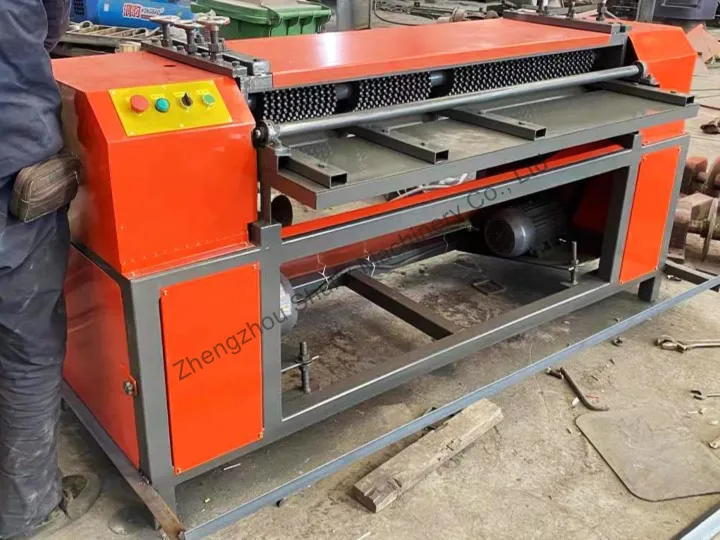
There are three practical ways to separate copper and aluminum from radiators:
- Manual teardown for occasional units
- Radiator stripping machine (300–600 kg/h) for small yards
- Full recycling line (500–2,000 kg/h, 99% purity) for volume processors
The right choice depends on one number — how many kilograms of radiators pass through your yard per day — because bonded copper-aluminum assemblies only pay clean-metal prices once the two metals are physically apart.
Why separation decides what a radiator is worth
Modern car radiators, AC condensers and heater cores are built as bonded composites: copper (or brass) tubes sweated or crimped into aluminum fin packs, sometimes with steel brackets. A buyer at the yard cannot melt a mixed bundle, so mixed radiators trade below either metal’s clean rate. Separate them and the copper tube fraction moves up-grade while the aluminum fins sell as their own pile — which is the entire business case for mechanical separation.
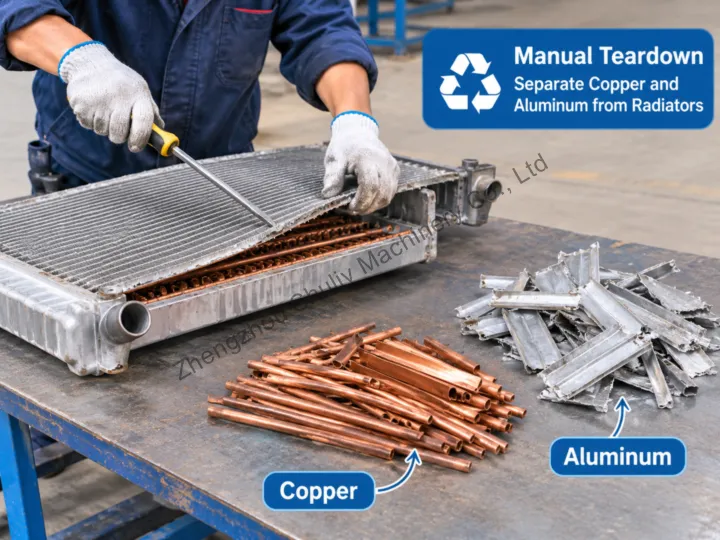
Method 1: manual teardown
Saw the end tanks, pry the brackets, pull tubes by hand. It works for one or two units a day, costs nothing in machinery, and stops being profitable almost immediately: bonded joints resist prying, tubes bend and shorten (dropping them from #1 tube grade toward #2), and hands, saws and refrigerant residue make the station slow and injury-prone. Manual crews are what our machine buyers are replacing.
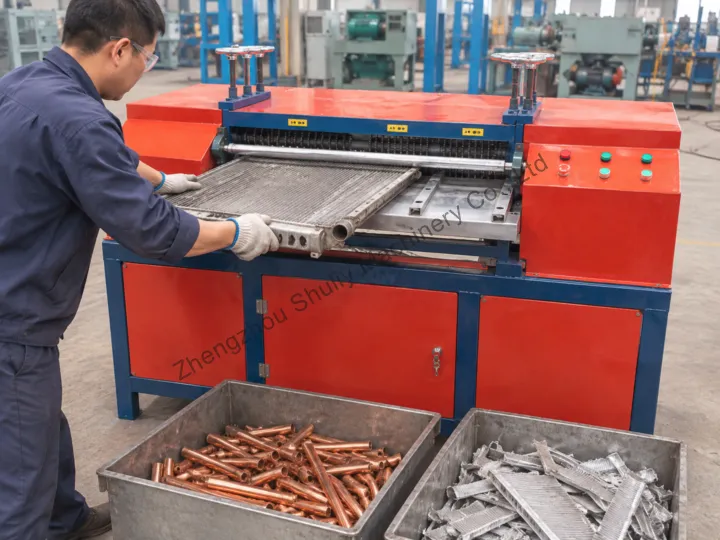
Method 2: a copper aluminum radiator separator (stripping machine)
A radiator stripping machine does in one station what a hand crew cannot do at speed: it peels copper tubes free of the fin pack while keeping tube length intact. The working sequence is three steps:
- Cut open. A 345B cutting saw (tool steel blade, 3 kW) slices the frame and welded joints so the core opens.
- Strip. Rotating 9CrSi alloy blades grip the bonded pack and peel the copper tubes out — 65 blades on the 300–400 kg/h model, 110 on the 500–600 kg/h model.
- Split into two piles. Copper tubes and aluminum fins discharge separately, ready for the scale.
One machine plus the saw draws 10 kW total and a 2×3 m floor corner — the standard answer for scrap stations and small factories processing a ton or two of radiators a day.
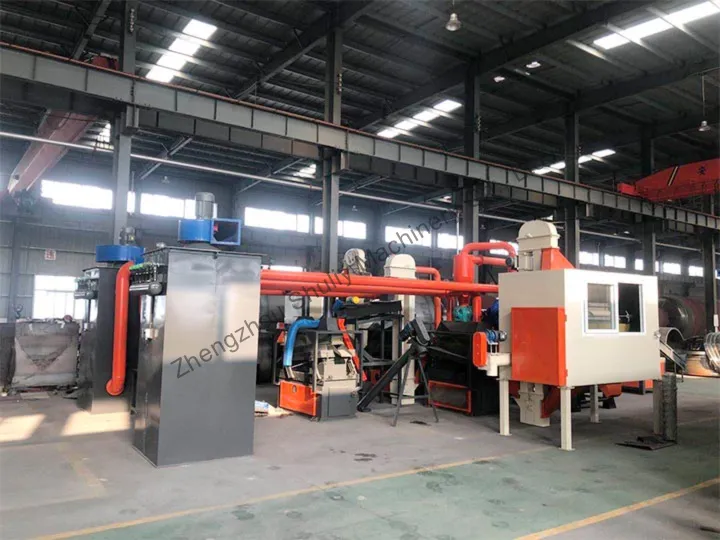
Method 3: a full six-stage recycling line
When the requirement is not “copper out of aluminum” but “three certified fractions — copper, aluminum, iron — at 99% purity,” shredding and sorting takes over. Our copper aluminum radiator recycling machine runs six stages: dual-shaft shredding, hammer-mill grinding, air separation on the density gap between the metals (copper 8.96 vs aluminum 2.7 g/cm³), magnetic removal of iron, color-sorting finishing, and pulse dust collection — 500–2,000 kg/h under PLC control, with one operator replacing ten to twenty hand crews.
For cleaning fine mixed chips rather than whole radiators, a standalone eddy current separator recovers non-ferrous fines from shredded streams — a different tool for a different stage, explained in our comparison guide.
Which method fits your volume
| Your radiator intake | Right method | Why |
|---|---|---|
| Occasional units, under ~100 kg/day | Manual teardown | No capital; accept grade loss on bent tubes |
| 1–5 t/day, small factory or scrap station | Stripping machine (850 or 1200) | 300–600 kg/h, 10 kW, tubes stay long and sell at higher copper grades |
| Above ~2 t/day, or smelter/trader purity contracts | Six-stage recycling line | 99% Cu/Al fractions, iron separated too, 500–2,000 kg/h |
FAQ of copper and aluminum radiator recycling solution
Can you separate copper and aluminum from radiators by hand?
Yes, but only economically at very low volume. Hand prying bends and shortens copper tubes, dropping them from #1 tube grade, and cannot free bonded fins quickly enough to matter above about 100 kg per day.
What machine separates copper tubes from aluminum radiator fins?
A radiator stripping machine: a cutting saw opens the assembly and rotating 9CrSi blades peel the copper tubes out of the aluminum fin pack. Shuliy’s models run 300-400 kg/h and 500-600 kg/h on 10 kW total.
How is 99% copper purity achieved if stripping machines leave some aluminum?
Purity contracts need the full sorting line – shredding, air separation on the density difference between copper and aluminum, magnetic iron removal and color sorting – which delivers three clean fractions at 500-2,000 kg/h.
Tell us your daily radiator intake and we will match the method — stripping machine or full line — with a quotation and layout plan.